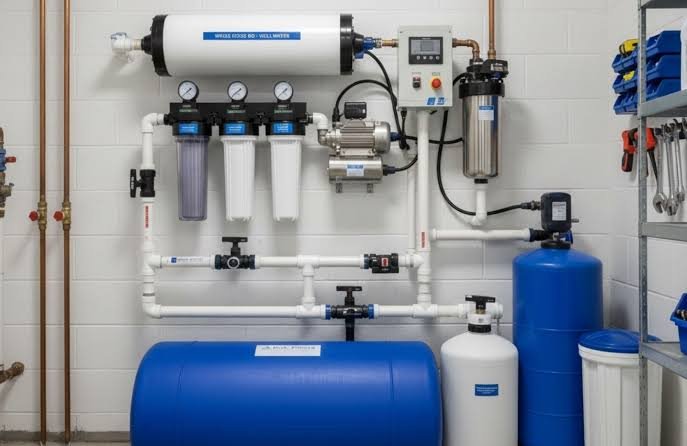
We tend to notice water only when something feels wrong with it. Maybe there’s a strange smell when you turn on the shower. Perhaps the glasses from the dishwasher have cloudy spots, or the water tastes a little metallic. Sometimes the problem is obvious. Other times, you simply know the water doesn’t feel quite right.
That’s where a good water treatment system can make a real difference. Rather than treating only the water you drink, a whole-home approach looks at the water used throughout the house — from the kitchen sink to the washing machine and shower.
It’s not about making water complicated. In fact, the best systems are designed to quietly do their job in the background.
What Is Whole-House Water Treatment?
Whole House Water Treatment refers to systems designed to treat water as it enters a home, rather than filtering it only at one faucet.
A point-of-use filter might improve the taste of drinking water, but it doesn’t necessarily address water used for bathing, laundry, cooking, or cleaning. A whole-house system takes a broader approach by treating water at the main entry point.
The exact setup depends on the water source and its quality. Some homes may need sediment filtration and activated carbon, while others could benefit from water softening, iron reduction, UV treatment, or additional technologies.
There’s no universal setup that works perfectly for every household. Your water tells you what it needs.
Why Treating Water at the Entry Point Makes Sense
Think about how much water a household uses in a single day. Drinking is only a small part of it.
You shower in it. You wash clothes with it. You run the dishwasher, fill pots for cooking, and clean your home with it. If the incoming water contains unwanted sediment, chlorine, excessive minerals, or other contaminants, those substances can affect more than your drinking glass.
Treating water at the main entry point can provide a more consistent level of filtration throughout the property. That can be particularly useful for families who want to improve water quality across the entire home instead of managing several individual filters.
It also makes things simpler. One properly designed system can be easier to maintain than a collection of separate devices scattered around the house.
Understanding What’s Actually in Your Water
Before buying a treatment system, testing the water is one of the smartest steps you can take.
Municipal water supplies are generally treated before reaching homes, but water quality can still vary depending on the local supply, plumbing infrastructure, and the condition of household pipes. Private wells have their own set of considerations and may contain naturally occurring minerals or other substances.
A water test can help identify hardness, iron, sediment, chlorine, total dissolved solids, and other characteristics. Once you know what you’re dealing with, selecting the right treatment becomes much easier.
Otherwise, it’s a bit like buying glasses before checking your eyesight. You might get lucky, but there’s a better way to do it.
Comprehensive Protection for More Than Drinking Water
One of the biggest advantages of a properly designed system is Comprehensive Protection across multiple areas of the home.
For example, sediment filtration can help reduce particles that may otherwise travel through household plumbing. Carbon filtration can improve taste and odor while reducing certain chemicals. If hard water is a concern, a softener can help reduce the minerals responsible for scale buildup.
This matters because hard water doesn’t just affect what you drink. Over time, mineral deposits can build up around faucets, showerheads, appliances, and plumbing fixtures.
The right treatment strategy can help reduce these everyday annoyances while supporting the long-term condition of household equipment.
Better Water Can Mean Easier Cleaning
There’s something oddly satisfying about cleaning a bathroom and seeing the fixtures stay clean for more than five minutes.
Hard water can leave mineral deposits on glass doors, faucets, sinks, and other surfaces. Soap can also react with hardness minerals, making residue more noticeable.
With appropriate treatment, some households find that cleaning becomes easier because there’s less scale and mineral residue to deal with. That doesn’t mean you’ll never need to scrub again — unfortunately, technology hasn’t quite reached that level — but it can make routine maintenance less frustrating.
Laundry can benefit too. Hard water may interfere with how detergents work, potentially leaving fabrics feeling less soft or looking dull over time.
Efficiency Matters, Too
Water treatment isn’t only about removing unwanted substances. A well-matched system can also support Enhanced Efficiency by helping household appliances operate under better water conditions.
Scale buildup inside water heaters, dishwashers, washing machines, and other equipment can affect performance over time. When mineral deposits accumulate, appliances may have to work harder to deliver the same results.
Reducing those deposits can potentially support more consistent operation and extend the useful life of equipment. Of course, actual results depend on water chemistry, appliance condition, and the treatment technology being used.
That’s why choosing a system based on real water data is so important.
Maintenance Shouldn’t Be an Afterthought
Even the best water treatment system needs regular care.
Filters need to be replaced. Softener components may require servicing. UV systems, if installed, need attention to keep them operating properly. Some systems also require periodic inspection to make sure flow rates and pressure remain where they should be.
The good news is that maintenance is usually manageable when you keep a schedule.
A simple calendar reminder can prevent the classic “I’ll change it next week” situation that somehow turns into six months.
Choosing the Right System for Your Home
There are plenty of water treatment products on the market, and they don’t all solve the same problems.
Start with the basics: Where does your water come from? What does the water test show? What problems are you actually experiencing? Do you want better taste, reduced hardness, fewer sediments, protection for appliances, or a combination of these?
From there, a qualified water-treatment professional can help determine which combination of filters or treatment technologies makes sense.
Avoid choosing a system simply because it has the most stages or the biggest specifications sheet. More equipment isn’t necessarily better. Appropriate equipment is better.
A Small Upgrade That Can Affect Everyday Life
Water treatment is one of those home improvements you may not think much about until you notice the difference.
Cleaner-feeling showers, fewer mineral spots, better-tasting water, and improved protection for plumbing and appliances can add up. None of these changes are particularly glamorous, but they can make everyday life a little easier.
The smartest approach is simple: test your water, understand the problem, and choose treatment based on evidence rather than guesswork.
When the system is properly designed and maintained, water treatment becomes almost invisible — and honestly, that’s the point. You shouldn’t have to think about your water every time you turn on the tap. You should simply be able to use it with confidence.
