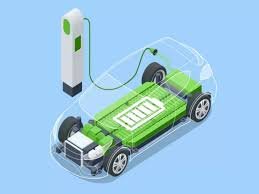
There’s something oddly reassuring about a full tank — or in today’s world, a fully charged battery. But what if you didn’t have to wait for that charge at all? What if, instead, you simply swapped your drained battery for a fresh one and drove off in minutes? That idea, once experimental, is slowly finding its footing in India’s evolving electric mobility story.
A Simple Idea with Big Implications
Battery swapping isn’t exactly new. The concept has been floating around for years, but only recently has it begun to feel… practical. In a country like India, where time, convenience, and affordability all matter deeply, the appeal is obvious.
Instead of waiting 30–60 minutes at a charging station, drivers could pull into a swapping hub, replace their battery in under five minutes, and continue their journey. No fuss. No planning around charging schedules. Just drive, swap, go.
That simplicity could be the key to unlocking mass EV adoption, especially in crowded urban spaces where installing home chargers isn’t always feasible.
Why India Might Be the Perfect Testing Ground
India’s traffic patterns, dense cities, and rising fuel costs create a unique environment where battery swapping could actually thrive. Think about delivery drivers, ride-hailing fleets, or even small business owners — they can’t afford downtime. Every minute off the road is money lost.
Battery swapping reduces that downtime dramatically.
It also tackles one of the biggest concerns around electric vehicles: battery degradation. When batteries are owned and managed by swapping networks instead of individuals, users don’t have to worry as much about long-term performance or replacement costs.
And let’s be honest, in a price-sensitive market like India, that matters more than flashy features.
The Economics Behind the Swap
Here’s where things get interesting. Batteries make up a significant portion of an EV’s cost — sometimes up to 40%. By separating battery ownership from the vehicle, manufacturers can offer cheaper electric cars upfront.
Users then pay for battery usage, almost like a subscription model. It’s a subtle shift, but a powerful one.
For someone hesitant about investing in an EV due to high initial costs, this model lowers the barrier to entry. You’re not buying the most expensive component outright — you’re renting it, in a way.
That flexibility could change buying behavior, especially in Tier 2 and Tier 3 cities.
Infrastructure: The Real Challenge
Of course, no idea is perfect without execution. Battery swapping depends heavily on infrastructure — and not just any infrastructure, but standardized systems.
Different car manufacturers currently use different battery designs. Without standardization, swapping becomes complicated, inefficient, and frankly, unrealistic.
India’s government has already started nudging the industry toward common standards, but it’s still early days. The success of swapping will depend on how well automakers, policymakers, and tech providers collaborate.
Because without a unified system, the convenience falls apart.
Not Just for Two-Wheelers Anymore
So far, battery swapping has seen the most success in electric scooters and three-wheelers. That makes sense — smaller batteries are easier to handle, and usage patterns are predictable.
But scaling this model to electric cars? That’s a different ballgame.
Cars require larger batteries, more robust safety systems, and advanced logistics. Still, companies are experimenting. Some startups are building modular battery packs, while others are testing automated swapping stations that feel almost futuristic.
It’s not widespread yet, but the direction is clear.
Somewhere in that transition lies the promise of Electric Cars ki Battery Swapping Technology ka Future India me — a future that isn’t loud or flashy, but quietly efficient.
Environmental and Practical Benefits
Beyond convenience, there’s a sustainability angle worth mentioning.
Centralized battery management means better recycling, optimized usage, and potentially longer battery life cycles. Instead of thousands of individuals handling battery issues separately, a network approach brings consistency.
Plus, it reduces pressure on the electricity grid. Swapping stations can charge batteries during off-peak hours and distribute them during peak demand. That kind of load balancing could make a real difference as EV adoption grows.
The Road Ahead Feels… Different
There’s a certain unpredictability to how technology evolves in India. Some ideas fail spectacularly, while others take off in ways no one expected.
Battery swapping sits somewhere in between right now — not fully mainstream, but definitely not niche either.
If the right partnerships form, if standardization improves, and if users begin to trust the model, it could become as normal as refueling at a petrol pump.
And maybe that’s the point. Not to revolutionize everything overnight, but to quietly fit into daily life.
Final Thoughts
Electric mobility in India isn’t just about reducing emissions or following global trends. It’s about finding solutions that actually work here — solutions that respect how people live, commute, and spend.
Battery swapping feels like one of those solutions. Imperfect, evolving, but grounded in practicality.
It won’t replace traditional charging entirely, and it doesn’t have to. But it might just carve out its own space, especially where speed and convenience matter most.
And if it does, the way we think about “charging” an electric car might change forever — not with a plug, but with a quick, seamless swap.
