There’s a moment that happens almost daily now — you open a food delivery app, scroll for a bit, tap “order,” and within minutes, something warm shows up at your door. No questions asked about where it was cooked, who made it, or what the place even looks like.
And that’s where things get interesting.
Because increasingly, that food isn’t coming from a traditional restaurant at all. It’s coming from something far less visible, yet surprisingly efficient — a cloud kitchen.
What Exactly Is a Cloud Kitchen?
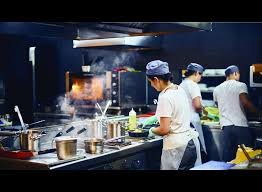
At its simplest, a cloud kitchen is a delivery-only food business. No dine-in area, no fancy interiors, no waiting staff. Just a kitchen, a team, and a steady stream of online orders.
It sounds minimal, and it is. But that minimalism is kind of the whole point.
Without the overhead costs of rent-heavy locations or décor, operators can focus on what really matters — the food and how quickly it reaches you.
It’s a shift from “experience-first dining” to “efficiency-first delivery.” And in today’s fast-paced urban life, that shift feels almost natural.
Why This Model Took Off So Quickly
Timing played a big role.
The rise of platforms like Swiggy and Zomato changed how people interact with food. Suddenly, discovery, ordering, and payment were all happening in one place.
Then came the pandemic — a turning point no one expected.
Restaurants had to adapt quickly, and cloud kitchens offered a way to survive. Lower costs, faster setup, and the ability to reach customers without physical footfall made them incredibly appealing.
But even after things normalized, the model stuck around. Because it worked.
The Business Side of Things
From an entrepreneur’s perspective, cloud kitchens are… intriguing.
You don’t need prime real estate. You don’t need to invest heavily in interiors. In fact, you can operate multiple brands from a single kitchen, targeting different cuisines or customer segments.
That flexibility is powerful.
For example, one kitchen might run a biryani brand, a Chinese takeaway, and a healthy meal service — all under different names, all using the same infrastructure.
It’s efficient, scalable, and, if done right, quite profitable.
A Different Kind of Customer Experience
Of course, something is lost in the process.
Dining out isn’t just about food — it’s about ambiance, conversation, the whole experience. Cloud kitchens strip that away.
But here’s the thing: not every meal needs that experience.
Sometimes, you just want good food, quickly, without leaving your home. And for that, cloud kitchens are perfect.
They’re not replacing restaurants — they’re complementing them.
Challenges Beneath the Surface
It’s easy to romanticize the model, but it’s not without its hurdles.
Competition is intense. Since entry barriers are lower, many players enter the market, making it harder to stand out.
Brand building becomes tricky too. Without a physical presence, your entire identity depends on packaging, online reviews, and digital visibility.
Then there’s quality control. Maintaining consistency across high volumes of orders isn’t easy, especially when customers expect restaurant-level standards.
And let’s not forget — delivery delays or poor packaging can ruin the experience, even if the food itself is good.
The Future Feels… Flexible
Looking ahead, cloud kitchens seem less like a trend and more like a permanent fixture in the food industry.
Technology will likely play a bigger role — from AI-driven demand forecasting to smarter kitchen operations. We might even see more automation creeping in.
But perhaps the most interesting part is how the model keeps evolving.
Some businesses are experimenting with hybrid setups — small dine-in spaces combined with delivery-focused kitchens. Others are focusing on niche concepts, like vegan-only menus or regional specialties.
Somewhere within all this experimentation lies the conversation around Cloud Kitchens ka business model aur future scope — not as a fixed answer, but as an ongoing story.
A Shift in How We Think About Food
At a deeper level, cloud kitchens reflect a broader change in consumer behavior.
Convenience has become a priority. Time is limited, expectations are high, and people want solutions that fit into their lives without friction.
Cloud kitchens deliver on that promise.
They may not have the charm of a cozy café or the buzz of a busy restaurant, but they offer something equally valuable — reliability, speed, and accessibility.
Final Thoughts
The next time you order food online, it might be worth pausing for a second.
Not to question the convenience, but to appreciate the system behind it — the quiet kitchens, the streamlined processes, the invisible networks making it all happen.
Cloud kitchens aren’t flashy. They don’t need to be.
They’re simply… practical.
And sometimes, practicality is exactly what a changing world demands.
