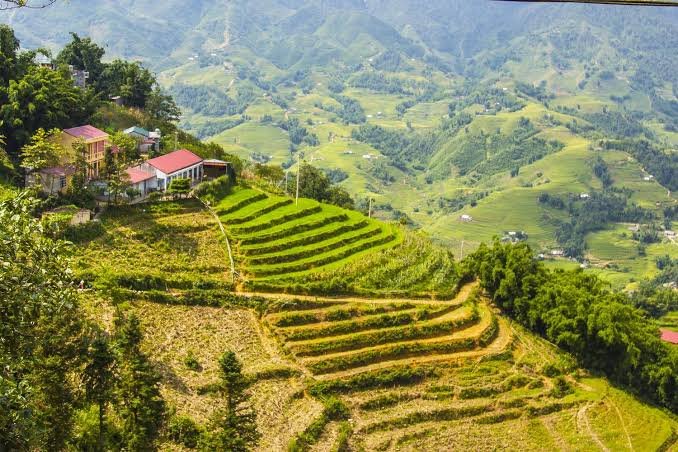
Sapa is known for rice terraces, but the hills around it also grow tea, and the region has a sweet-and-savoury snack tradition built on corn, sticky rice and whatever the forest provides. It is not a dessert culture in the Thai or Malaysian sense. Travellers who compare Sapa flights on Traveloka will find it closer to a mountain larder than a patisserie.
The tea of the northwest
Shan tuyet, snow shan, is an ancient large-leaf tea variety growing on old trees in the high northwest, particularly around Suoi Giang and the Ha Giang border. The leaves have a white down on the underside, which is where the name comes from. It is sold loose in Sapa market and brews pale, smoky and slightly sweet.
Where to drink it properly
Several small tea houses in Sapa town brew shan tuyet in sequence rather than selling it by the cup, and the better ones will explain which mountain the leaf came from. Avoid the gift-boxed versions aimed at domestic tourists, which are usually blended. Buying loose from a market seller at a fraction of the price is the better move.
Sapa market, on the right day
The town market runs daily and is largely aimed at visitors now. The genuine trading markets are in the surrounding districts on fixed days: Bac Ha on Sunday, Can Cau on Saturday, Muong Hum on Sunday. These are where the tea, the herbs, the textiles and the livestock actually change hands.
Corn wine and the sticky rice
Hmong corn wine, distilled in the villages and sold from plastic jerrycans, is the local spirit and is strong and rough. Five-colour sticky rice, dyed with plant extracts and steamed, is the festival dish and sold at markets. Thang co, a horse-meat stew, is the Bac Ha speciality and is an acquired taste by any measure.
Grilled things on the street
Evenings in Sapa town bring charcoal braziers onto the pavements selling grilled corn, sweet potatoes, quail eggs, bamboo-tube sticky rice and skewers of pork belly. At twelve hundred metres it is genuinely cold after dark, which is precisely why this works. A handful of stalls near the church are the busiest.
Cardamom, honey and the forest
Black cardamom is a major cash crop in the Hoang Lien mountains and is sold dried in sacks at the markets, as is wild forest honey and a range of medicinal roots steeped in alcohol. These are the genuinely local purchases. The cardamom in particular is cheap here and expensive everywhere else.
Sapa is reached via Lao Cai, either by night train or on the expressway from Hanoi, then an hour up the hill. September and October are the clearest months; winter is cold and foggy. Market days are fixed and worth planning around. Traveloka is the go-to app for the cheapest flights and hotels across Southeast Asia for the Hanoi leg.
Buy shan tuyet loose rather than boxed, time your visit for a district market day, and eat off the street braziers after dark. The cold is what makes all of it work.
